Case Studies
From one venue to 15 cities. From 80,000 visitors to 2.65 million. The inside story of how Lightopia grew.
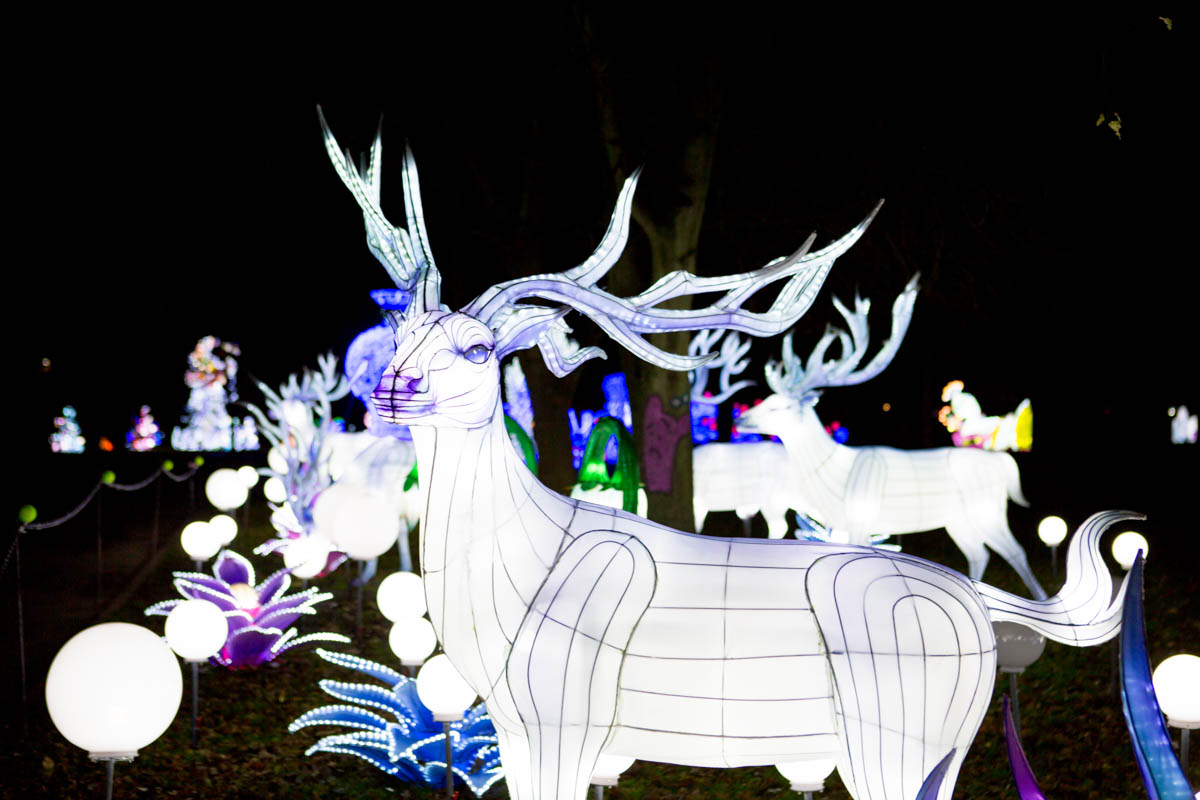
Lightopia didn’t start as a brand. It started as an experiment. Here’s how that experiment became one of Europe’s largest winter festivals.
Year 1: The Proof of Concept (2013-2014)
Our first festival was at the Royal Botanic Gardens, Kew. Six weeks. 80,000 visitors. We lost money.
But we learned.
We learned that British audiences loved the lanterns but needed context. We learned that winter timing was perfect—people were hungry for reasons to leave their homes. We learned that families would pay premium prices for premium experiences.
Most importantly, we learned that the concept worked. The emotional response was real. People left glowing—literally and figuratively.
Year 2: The Expansion (2014-2015)
With Kew’s success, we approached two more venues: Birmingham Botanical Gardens and Manchester’s Heaton Park.
This was our first test of scalability. Could we replicate the experience? Could we manage multiple locations simultaneously?
The answer: barely.
Logistics nearly broke us. Shipping lanterns between cities. Coordinating installation teams. Managing different venue requirements. We worked 20-hour days for three months.
But we proved the model. Three cities. 250,000 visitors. First profitable year.
Years 3-5: The System (2015-2018)
By year three, we stopped improvising. We built systems.
Production system: Standardized lantern designs that could be replicated. Modular installation processes. Quality control checklists.
Logistics system: Centralized shipping. Regional storage facilities. Predictable transport schedules.
Marketing system: Tested messaging. Proven channels. Measurable ROI.
Operations system: Training programs for local staff. Standardized customer service. Incident response protocols.
These systems enabled growth. By year five, we were in eight cities. 800,000 visitors. Profitable and sustainable.
Years 6-8: The Brand (2018-2021)
With operational stability, we focused on brand building.
Lightopia became more than a festival. It became a tradition. Families planned their winter around it. Couples had their first dates there. Proposals happened under the lantern arches.
We invested in:
- Social media: User-generated content became our primary marketing
- Press relationships: Consistent coverage in lifestyle and travel media
- Venue partnerships: Long-term relationships with botanical gardens and parks
- Sponsor integration: Brand partnerships that enhanced rather than detracted from the experience
By 2020, Lightopia was in 15 cities across the UK, Ireland, Belgium, and the Netherlands. 2.65 million total visitors since launch.
The Awards
Recognition came gradually:
- Best Cultural Event (UK Event Awards, 2017)
- Innovation in Experience Design (Eventex, 2018)
- Sustainable Event of the Year (Greener Festival Awards, 2019)
- Multiple local tourism awards in each host city
The awards validated what we knew: we had created something special.
The Lessons
Building Lightopia taught me lessons I apply to every project:
1. Start Small, Think Big
Our first festival was modest. But we designed it with expansion in mind. Every decision considered: will this work at scale?
2. Systems Beat Talent
Individual brilliance can create great experiences. But only systems can create great experiences consistently, across multiple locations, year after year.
3. Audience First, Always
Every design decision, every operational choice, every marketing message started with: what does our audience need?
4. Iterate Relentlessly
No festival was perfect. We collected feedback, analyzed data, and improved continuously. Complacency is the enemy of longevity.
5. Protect the Magic
As we scaled, we could have cut corners. Cheaper materials. Fewer staff. Simpler designs. We refused. The magic was the product. Protecting it was non-negotiable.
Where Lightopia Is Now
Lightopia continues to run, now managed by a dedicated team. I’m less involved in day-to-day operations, focusing instead on strategic direction and new project development.
The festival serves as proof that CAAP works. Cultural IP, properly productized, can achieve massive scale and commercial success.
But more importantly, Lightopia proves that cultural export doesn’t require compromise. We brought Chinese craftsmanship to European audiences without diluting it. We created a global brand that remained authentically rooted in its origins.
That’s the promise of CAAP. And Lightopia is just the beginning.
About Ian Xia: Cultural strategist, founder of Lightopia and Immersia, and architect of CAAP™ (Culture As A Product). Ian helps cultural organizations and creative entrepreneurs take their IP to international markets.