The Three Traps That Kill Most Chinese Cultural Export Projects
Most Chinese cultural export projects fail in the same places. Not because the work isn’t good. Because nobody told them the difference between culture and a cultural product.
Most Chinese cultural export projects fail in the same places.
Not because the work isn’t good. But because the people behind them never realised there’s a fundamental difference between culture and a cultural product.
After more than a decade working in this space, I’ve watched the same three traps claim project after project. I’ve fallen into all of them myself.
Here they are — with no softening.
Trap One: Treating “Spreading Culture” as a Business Model
The most common mission statement I hear from Chinese cultural projects going international is some version of: “We want foreigners to understand Chinese culture.”
That’s a noble goal. But it is not a value proposition. And it will not sell a single ticket.
The question you actually need to answer isn’t “do foreign audiences need to learn about this culture?” The question is: “What will someone pay for? And why?”
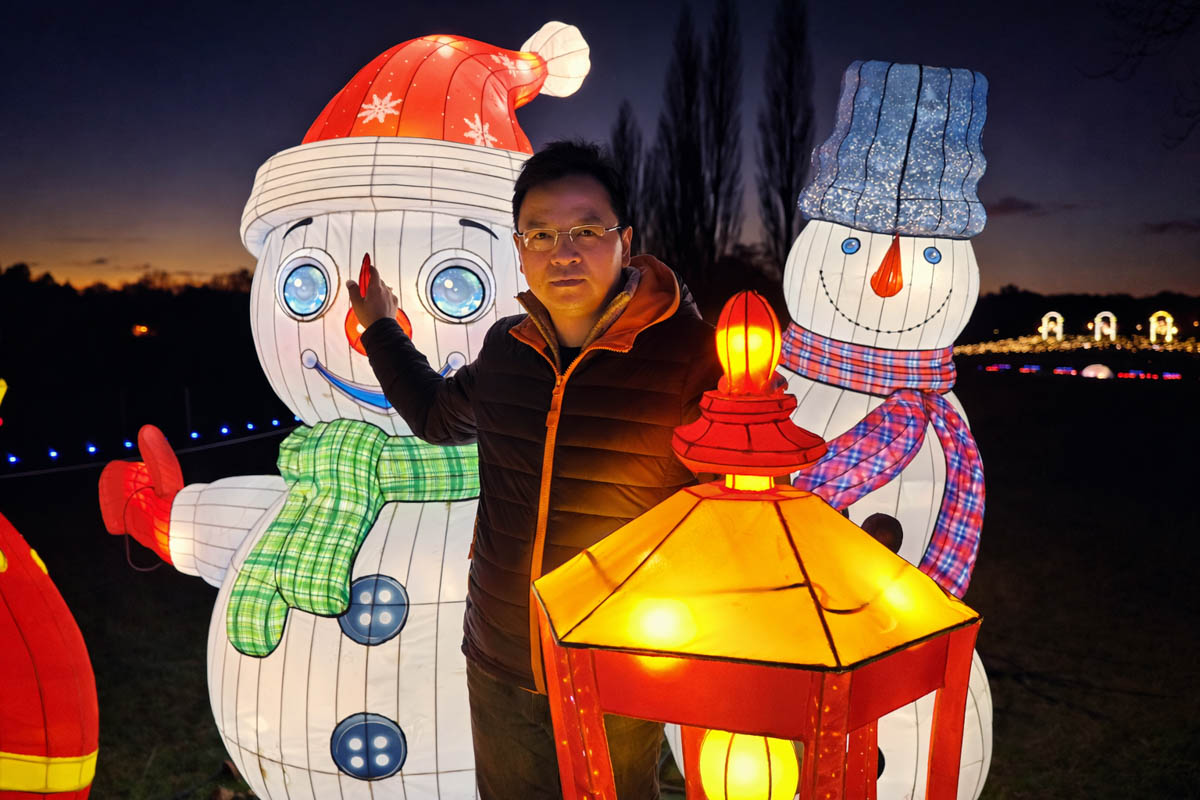
When Lightopia Festival succeeded in the UK, it wasn’t because we convinced British families that they needed to learn about Chinese lantern traditions. We succeeded because we built something that gave families a reason to go out on a cold winter evening — something that made children scream with delight, made parents take the best photos they’d ever taken, and left everyone feeling like they’d been somewhere genuinely extraordinary.
The culture was the core. The experience was the vehicle. The product was the container.
Without a container, the most precious cultural core in the world will never reach your audience.
Trap Two: Skipping Localisation
Before we opened in Manchester, I sent the team into the city for three days — not to do logistics, but just to walk around and pay attention.
They came back with something they’d noticed everywhere: bees. On the pavements. On lamp posts. On the sides of buildings. On merchandise in shop windows.
Why bees? Because Manchester people identify with the bee. It represents their city’s character — industrious, collective, resilient. It became the city’s emblem after the 2017 Arena attack, and it had been part of the city’s identity long before that.
So we designed a bee lantern for that installation. And in the finale of the water and light show — where other cities might have Santa Claus — Manchester got a glowing bee delivering the Christmas gifts.
On opening night, one of the visitors cried. She told a member of our team she couldn’t believe a Chinese cultural company had taken the time to understand what Manchester meant.
Localisation isn’t compromise. Localisation is the key that unlocks someone else’s heart.
When an international audience encounters your work and sees something familiar and deeply respected inside it, that’s when your culture stops being “foreign” and starts being felt.
Trap Three: Mistaking Awards for Success
Winning international recognition feels like validation. And it is — to a point. But I’ve seen more than one project collect prestigious awards and then quietly collapse because no one had designed a viable business.
Awards don’t pay operational costs. Awards don’t keep staff employed. Awards don’t fund the next city.
A cultural project that’s sustainable needs a clear commercial architecture:
– Who buys tickets, and at what price point?
– Who sponsors, and what do they get in return?
– How do the revenues split between you and your venue partner?
– What does it cost to replicate the project in a second city, and does the model get more efficient at scale?
Without answers to those questions, you’re running on passion and grant money, and passion doesn’t compound. It burns.
The Chinese lantern festival model I developed across fifteen cities worked because the commercial design was part of the product design from the beginning — ticket revenue, venue revenue sharing, brand sponsorships, and a multi-city touring structure that made each additional location cheaper to run than the last.
A beautiful lantern with no power source doesn’t glow. A beautiful cultural project with no commercial model won’t last.
The Pattern
These three traps share a common root: they’re all symptoms of treating culture as the destination rather than the material.
Culture is what you’re working with. The product is what you’re building.
The distance between those two things — between a cultural tradition and an experience someone will travel across town to pay for — is what I’ve spent the last decade learning to bridge.
That work eventually became a framework I call CAAP™ — Culture As A Product. I’ll lay it out properly in a future post.
But for now, if you’re working on a cultural project with international ambitions, run it against these three questions:
1. Can you articulate what someone is buying — not what they’re learning?
2. Does your project reflect something the local audience already cares about?
3. Does your commercial model have at least two independent revenue sources?
If you can’t answer all three, you’ve found your starting point.
Ian Xia is the founder of Xiangvision (英伦大像), Lightopia Festival, and the CAAP™ Culture As A Product system. He has spent over a decade commercialising Chinese cultural projects internationally.